管理人オススメコンテンツはこちら
「地球上の会社をまるごとまとめて買う|人口減少時代に考える、子どもへの新しい資産承継」
\NISAやるなら/
●前回のおさらい
多くの人がお金に悩む理由の一つは、これまで十分に金融教育を受けてこなかった点にあります。
日本では国語や算数などの教科には多くの時間が割かれてきた一方で、貯金や税金、資産形成といった生活に直結するお金の知識は体系的に学ぶ機会が限られてきました。そのため、金融リテラシーは家庭環境や親の価値観に大きく左右されやすい状況にあります。
近年は学校でも金融教育が導入され始めていますが、実生活で十分に活かせるレベルにはまだ達していないのが現状です。こうした背景を踏まえると、お金に困ることは単なる自己責任ではなく、学習機会の不足という構造的な問題とも言えます。
だからこそ、これからは自ら学び直し、お金との向き合い方を身につけることが重要です。
●お金に困る理由とこれからの日本(つづき)
今回は
・これからの日本
・子どもに何を残すべきか
について考えていきます。
これからの日本は縮む。その現実から目を逸らす代償は大きい
まず
日本の未来についてです。
これから日本では
少子高齢化と人口減少が
想像以上のスピードで進んでいきます。
つまり
人口減・経済縮小が
メガトレンドなんですね。
内閣府のデータによると
2010年に1億2千800万人だった人口は
2060年には8700万人にまで減少する。
実に4,000万人以上の減少です。
これは
東京都の人口のおよそ3倍にあたる人数が
減る計算になります。
さらに
65歳以上の割合も2025年の30%から
2060年には40%へ上昇すると予測されています。
図にするとこうです↓
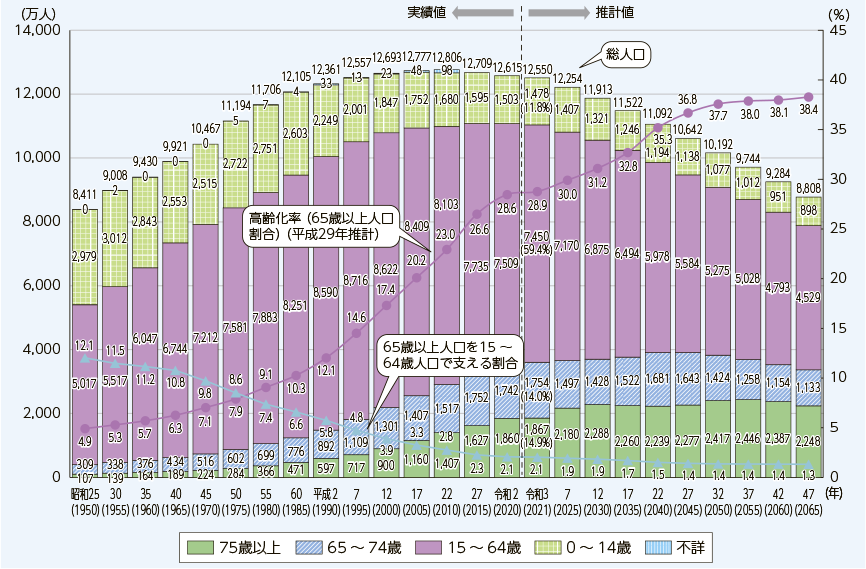
(出典:https://www.soumu.go.jp/johotsusintokei/whitepaper/ja/r04/html/nd121110.html)
図で見ると
その変化の大きさが
よく分かります。
こうした状況になれば
国全体の経済規模は縮小し
社会保障制度も
今まで通りとはいかなくなる
可能性があります。
つまり
私たちの子ども世代が生きる未来は
今よりさらに
厳しい環境になっているかもしれない
ということです。
だからこそ
国に頼るだけではなく
自分自身でも資産を築いていく
そんな準備が必要な時代に
なってきているのです。
実際
将来への不安を抱える人は
少なくありません。
「次の時代を生きる子どもたちのために
親として何ができるのか?」
これは
とても切実なテーマですよね。
子どもに残すべきものとは?
では子どもたちに
何を残せばいいのでしょうか。
ここで改めてお伝えしたいのが

(出典:リベラルアーツ大学)
『人生を豊かにするお金にまつわる5つの力』
です。
これは時代が変わっても
本質的には変わらないんですよ。
・貯める力
・稼ぐ力
・増やす力
・守る力
・使う力
この5つがバランスよく育つことで
お金に困りにくい
豊かな人生につながっていきます。
これは子どもだけでなく
私たち大人自身も
伸ばしていきたい力ですね。
とはいえ
- 何歳で
- どこまで
- どんな順番で
お金の教育を伝えていくのか。
そのカリキュラムについては
まだ体系化されたノウハウが
十分あるとは言えません。
だから今回お伝えしたいのは
とてもシンプルな考え方です。
子どもの口座で「オルカン」を持つという選択
子どもの口座で
オルカン(全世界株式インデックス)を
100万円分購入し長期で保有する。
この方法には
大きく2つの意味があります。
それは
・お金を増やす力の教育になること
・子どもを弱くしない範囲でのお金を残せること
です。
『全世界株式インデックスは
先進国から開発途上国までをカバーしている
時価総額加重平均型の株価指数のこと。
三菱UFJアセットマネジメント株式会社は
同社が運用する
eMAXIS Slim 全世界株式
(オール・カントリー)に対して
オルカンという愛称を付け
これを2022年1月28日に商標登録している。
(商標登録第6506054号)
48カ国
大型株と中型株を対象に
時価総額の約85%をカバーしている』
(出典:Wikipedia)
イメージとしては
「地球上の会社をまるごとまとめて買う」
そんな感覚に近いかもしれません。
お金を与えすぎると、子どもは弱くなる?
ここで大切なのが
・お金を残す
・与えすぎる
は別物だということです。
親としては
子どもには苦労してほしくない。
その気持ちは自然なものです。
お金を与えすぎると
子供は弱くなっちゃうんですね。
お金や物を与えすぎると
自分で考える力が
育ちにくくなっちゃう。
子どもには本来
- 自分で考える力
- 環境に適応する力
が備わっています。
しかし
親が先回りして
問題をすべて解決してしまうと
その力が育つ機会を
奪ってしまうこともあるのです。
一方で今と30年後では
時代背景が大きく違うのも
事実です。
だからこそ
時代によるハンデを
少しでも和らげるために
親としてできる準備をしておく。
これは十分アリだと
思っています。
やっぱり
自分の子どもは可愛いですからね。
なぜ「オルカン」を贈り物にすると、教育とお金の両方を残せるのか?
ではなぜ
オルカンという贈り物が
・教育
・お金
この2つを同時に残せるのでしょうか。
この贈り物のメリットを
お伝えしていきたいと思います。
〜〜〜つづく〜〜〜
Special Thanks college president Ryo.
▼無料で口座を作る
●おまけ
≪≪perplexityちゃんによる文章まとめ≫≫
日本は今後、少子高齢化と人口減少が急速に進み、経済縮小が避けられないとされています。人口は2060年に約8700万人まで減少し、高齢者割合も40%に達する見込みで、社会保障もこれまで通りとはいかなくなる可能性があります。そのため、国に頼るだけでなく、自ら資産を築く力が重要になります。
子どもに残すべきはお金そのものではなく、「貯める・稼ぐ・増やす・守る・使う」の5つの力です。具体例として、全世界株式(オルカン)を長期保有することで、資産形成と金融教育を同時に実現できます。与えすぎず、学びにつなげることが大切です。
Citations:
[1]https://www.shiruporuto.jp/public/document/container/katei_education/edu002.html
[2]https://at-seminar.net/column/archives/1499
[3]https://gooddo.jp/magazine/health/low_birthrate_and_aging/
[4]https://www.bk.mufg.jp/column/events/secondlife/b0029.html
[5]https://www.env.go.jp/policy/hakusyo/h30/html/hj18010102.html
≪≪Chat-GPTくんによる英訳≫≫
【A Quick Recap】
One of the main reasons many people struggle with money is the lack of adequate financial education.
In Japan, while a great deal of time has traditionally been devoted to subjects such as language and mathematics, practical financial knowledge—such as saving, taxes, and asset building—has rarely been taught in a systematic way. As a result, financial literacy often depends heavily on family background and parents’ values.
Although financial education has recently begun to be introduced in schools, it still has not reached a level where people can fully apply it in everyday life. Given this reality, financial hardship cannot simply be dismissed as a matter of personal responsibility. It is also a structural issue caused by limited learning opportunities.
That is precisely why it has become increasingly important to relearn and develop a healthier relationship with money.
【Why People Struggle Financially and What Lies Ahead for Japan (Continued)】
This time, we will explore:
・The future of Japan
・What we should leave behind for our children
Japan is facing a much faster pace of population decline and aging than many people realize.
In other words, declining population and economic contraction are becoming Japan’s major long-term megatrends.
According to data from Japan’s Cabinet Office, the country’s population, which stood at 128 million in 2010, is projected to decline to approximately 87 million by 2060.
That represents a decrease of more than 40 million people.
To put that into perspective, it is roughly equivalent to losing three times the population of Tokyo.
Furthermore, the proportion of people aged 65 and older is expected to rise from around 30% in 2025 to nearly 40% by 2060.
(See chart below)
Source: Ministry of Internal Affairs and Communications
https://www.soumu.go.jp/johotsusintokei/whitepaper/ja/r04/html/nd121110.html
When viewed visually, the scale of this demographic shift becomes even clearer.
If these trends continue, Japan’s overall economic size may shrink, and the social security system may no longer function in the same way it has in the past.
This means that the world our children will inherit could be even more challenging than the one we live in today.
That is why we are entering an era in which relying solely on government support may not be enough.
We need to prepare by building assets on our own as well.
In fact, many people—like the individual seeking advice in this discussion—carry concerns about the future.
“What can we, as parents, do for children who will live in the next era?”
This is a deeply personal and urgent question.
【What Should We Leave Behind for Our Children?】
So what exactly should we leave for our children?
Here, I want to revisit an idea I often emphasize:
The Five Money Skills That Create a Richer Life
(Source: Liberal Arts University)
These principles remain fundamentally unchanged, regardless of how times evolve.
・The ability to save
・The ability to earn
・The ability to grow wealth
・The ability to protect wealth
・The ability to spend wisely
When these five skills develop in balance, they help create a fulfilling life that is less vulnerable to financial hardship.
These are not only skills we want our children to develop, but also skills we as adults should continue strengthening ourselves.
That said, there is still no universally established curriculum answering questions such as:
・At what age should financial education begin?
・How much should children be taught?
・In what order should these lessons be introduced?
There is still limited systematic know-how in this area.
That is why I want to present a very simple idea.
【Choosing to Hold “Orukan” in a Child’s Investment Account】
One option is to purchase and hold ¥1 million worth of “Orukan” (a global stock index fund) in a child’s investment account for the long term.
This approach carries two important meanings:
・It teaches children how money can grow
・It leaves behind financial support without weakening their independence
The global stock index referred to here covers companies across both developed and emerging economies and is weighted by market capitalization.
Mitsubishi UFJ Asset Management markets its “eMAXIS Slim All Country” fund under the nickname “Orukan,” a trademark officially registered in January 2022.
The fund covers approximately 48 countries and includes large- and mid-cap companies, representing roughly 85% of global market capitalization.
(Source: Wikipedia)
An easy way to picture it is this:
It is like buying the world’s companies all at once.
~Does Giving Too Much Money Make Children Weaker?~
An important distinction needs to be made here.
Leaving money behind and overproviding are not the same thing.
As parents, we naturally do not want our children to struggle.
That feeling is completely understandable.
However, giving children too much money or material comfort can make it harder for them to develop the ability to think independently.
Children naturally possess:
・The ability to think for themselves
・The ability to adapt to their environment
But when parents step in too early and solve every problem on their behalf, those abilities may never fully develop.
At the same time, it is also true that the world 30 years from now may look dramatically different from today.
That is why preparing as parents—so that we can soften some of the disadvantages created by changing times—can be a reasonable and meaningful choice.
After all, we love our children.
~Why Can “Orukan” Leave Behind Both Education and Money?~
So why can a gift like Orukan leave behind both:
・Education
・Money
at the same time?
Next, I would like to explain the specific advantages of this approach.
Special Thanks OpenAI and Perplexity AI, Inc