
管理人オススメコンテンツはこちら
「黒字になる日を1日でも前倒しする|あなたの家計は、何日目で黒字になりますか?」
\NISAやるなら/
●前回のおさらい
資産額や年収だけでは、本当の裕福さは測れません。資産が多くても生活費が大きければ不安は消えず、年収が高くても忙しすぎてお金を使う余裕がなければ豊かさを感じにくいからです。
そこで重要なのが「働かなくても今の生活を何年続けられるか」という視点です。裕福度は「保有資産額÷年間生活費」で表せます。たとえば資産1,000万円・生活費400万円なら2.5年分です。
この考え方なら、資産を増やすだけでなく、生活費を下げることでも裕福度を高められます。
●3つ目のモノサシ(つづき)
モノサシ3: 時間ではかる(つづき)
前回は
3つ目のモノサシ
時間ではかるを紹介しました。
裕福度 = 保有資産額 ÷ 年間生活費
今回はこの考え方の
実践編です。
FIREの「25年分」は、時間のモノサシそのもの
実はあの有名な『FIRE』も
まったく同じ発想の上に
成り立っています。
欧米を中心にブームになったFIRE。
言葉の中身はこうです。
| 頭文字 | 意味 |
| Financial | 経済的な |
| Independence | 自立を得て |
| Retire | 引退する |
| Early | 早期に |
これも3つ目のモノサシが
基準になっています。
そしてFIREの達成基準として
よく語られるのが
「年間生活費の25年分を貯めよ」
というルールです。
お気づきでしょうか?
これって
前回の計算式そのものですよね?
働かずに望む生活を
25年間維持できる状態。
それがリタイアしてよい
裕福さの水準だという
考え方なんですね。
引退出来るだけの裕福さを
手に入れた状態であるという事です。
計算してみましょう。
例えば
生活費が年400万円の場合は
FIREに必要な資産は
400万円×25年=1億円
という事になります。
なぜ『25年分』なのか?
この数字は
『年4%ずつ取り崩す』という
前提から来ています。
資産を運用しながら
年4%の範囲で取り崩せば
理論上は元本が大きく減らず
25年を超えて資産が持続すると
考えられています。
単純に
25年で使い切る想定ではない
という点は押さえておいてください。
「FIREに興味あるけど1億円なんて無理だよ!」
「こんな急に貯められないよ!」
——そう思った方は
サイドFIREを目指してみてください。
生活費の一部を
労働でまかなう前提にすれば
必要な資産額はぐっと下がります。
もうひとつの時間の測り方:「何日目で黒字になるか」
裕福さを時間ではかる方法は
資産だけではありません。
もうひとつ
毎月の家計で測るやり方があります。
問いはこうです。
あなたの家計はその月の何日目で黒字になりますか?
計算のルール
収入は日割りで計算する(働かないともらえないため)
生活費は初日に全額かかるものと仮定する(生きているだけで発生するため)
Aさんの例
・月収:45万円
・生活費月:30万円
としましょう。
1日あたりの収入は
45万円 ÷ 30日 = 1.5万円。
20日働いたところで収入は
1.5万円×20日=30万円
20日働いた時点で
生活費の30万円を
払いきれる計算になります。
つまりAさんの家計は
20日目で黒字。
残りの10日ぶんが
Aさんの持っている
『自由な時間』です。
どうでしょう?
あなたの家計は
何日目で黒字になるでしょうか?
ぜひ計算してみてください。
5日目で黒字になる友人の話
私の友人に
こんなフリーランスがいます。
- 手取り月収:100万円
- 月の生活費:15万円
1日あたりの収入は約3.3万円。
3.3万円 × 5日 = 16.5万円
5日働いた時点で
生活費の15万円を
上回ってしまいます。
黒字になるのは5日目。
早すぎますよね。
彼にとって残りの25日は
働いても働かなくてもいい時間です。
実際日頃から
ものすごくゆとりを感じているそうです。
ここで大事なのは
彼が無理に節約しているわけではない
という点。
自分の望む生活水準で暮らした結果が
15万円だったというだけの話です。
生活費が低いことは
我慢の証ではありません。
分母が小さいほど
同じ収入で買える自由が増える
ということです。
不労所得があると、黒字の日はさらに早まる
ここに配当・利子・不動産収入などの
資産所得が少しでも加わると
黒字になる日はもっと前倒しになります。
.jpg)
(出典:リベラルアーツ大学)
そしてもし
生活費の15万円がすべて
- 配当
- 利子
- 不動産所得
だけでまかなえるようになったら
——それは完全な『経済的自由』です。
黒字になる日は
1日目より前ということになります。
資産で測るか、収入で測るか
時間で裕福さを測るとき
材料は資産でも収入でもかまわないと
私は思っています。
収入と生活費から
何日目で黒字になるかを計算することは
結局
残りの何日を自由に暮らせるかを
計算するのと同じだからです。
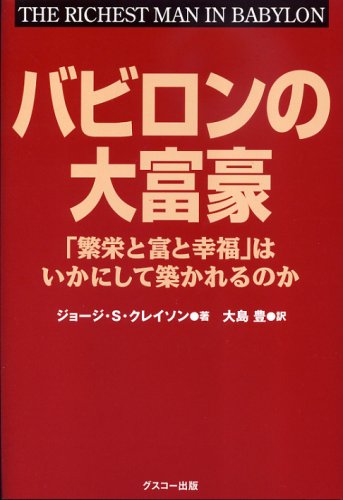
(出典:楽天)
自分の労働力を計算に組み込むのは
『バビロンの大富豪』の教えにある
「自分自身を最大の資本とせよ」
という原則にも合った考え方です。
もちろん
勤務時間の決まったサラリーマンで
5日働いて25日休むは
現実的ではありません。
ただ
働き方の自由がきくフリーランスなら
不可能ではない。
実際そういう方は
いらっしゃいます。
そしてサラリーマンであっても
この計算をする意味は十分にあります。
『黒字になる日を1日でも前倒しする』
——それが資産形成そのものだからです。
〜〜〜つづく〜〜〜
Special Thanks college president Ryo.
 管理人_じっちょ
老後のために、まず投資口座を開いておきましょう。
無料・5分で完了です→【公式】楽天証券
●おまけ
≪≪perplexityちゃんによる文章まとめ≫≫
FIREは、「年間生活費の25年分」を資産で持つという考え方で、時間のモノサシを使って豊かさを測る方法です。たとえば生活費が年400万円なら、必要資産は1億円になります。これは、資産を年4%で取り崩しても長く持続するという前提に基づいています。
さらに、毎月の家計を「何日目で黒字になるか」で考えると、収入から自由な時間の長さが見えてきます。生活費が少ないほど、同じ収入でも早く黒字になり、不労所得があれば経済的自由はさらに近づきます。
Citations:
[1]https://ja.wikipedia.org/wiki/FIRE_ムーブメント
[2]https://www.jafp.or.jp/know/fp/sheet/
[3]https://allabout.co.jp/gm/gc/12538/3/
[4]https://diamond.jp/articles/-/261810?page=2
[5]https://diamond.jp/articles/-/294108
≪≪Chat-GPTくんによる英訳≫≫
【Recap of the Previous Article】
Your true level of wealth cannot be measured by your assets or annual income alone.
Even if you have substantial assets, financial anxiety may not disappear if your living expenses are high. Likewise, even if you earn a high income, it can be difficult to feel wealthy if you are too busy to have the time or freedom to enjoy your money.
That is why it is important to look at “How many years could you maintain your current lifestyle without working?”
Your level of wealth can be expressed as:
Wealth = Total Assets ÷ Annual Living Expenses
For example, if you have ¥10 million in assets and spend ¥4 million a year, you have 2.5 years’ worth of living expenses.
With this way of thinking, you can increase your level of wealth not only by increasing your assets, but also by reducing your living expenses.
【The Third Measure of Wealth (Continued)】
~Measure No. 3: Measure Wealth in Time (Continued)~
Last time, I introduced the third measure of wealth:
Measuring wealth in terms of time.
The formula is:
Wealth = Total Assets ÷ Annual Living Expenses
This time, let’s look at how to put this idea into practice.
~FIRE’s “25 Years’ Worth” Is Essentially the Time-Based Measure of Wealth~
In fact, the well-known concept of FIRE is based on exactly the same idea.
FIRE became popular, particularly in Europe and the United States.
The acronym stands for:
| Letter | Meaning |
|---|---|
| F | Financial |
| I | Independence |
| R | Retire |
| E | Early |
In other words:
Financial Independence, Retire Early.
This concept is also based on the third measure of wealth.
One commonly cited guideline for achieving FIRE is:
“Save 25 years’ worth of your annual living expenses.”
Do you see it?
That is essentially the exact same formula we looked at last time, isn’t it?
The idea is that if you have enough assets to maintain the lifestyle you want for 25 years without working, you have reached a level of financial wealth at which you can retire.
In other words, you have accumulated enough wealth to be able to retire.
Let’s do the math.
For example, if your annual living expenses are ¥4 million:
¥4 million × 25 years = ¥100 million
So you would need ¥100 million in assets to achieve FIRE under this rule.
~Why “25 Years’ Worth”?~
This number comes from the assumption that you withdraw 4% of your assets per year.
If you continue investing your assets while withdrawing no more than 4% per year, the theory is that your principal will not decline substantially and your assets can potentially last for more than 25 years.
Keep in mind that this does not simply mean you are assuming that you will spend everything over 25 years.
“If I’m interested in FIRE, but there’s no way I can save ¥100 million!”
“I can’t possibly accumulate that much money that quickly!”
If that’s how you feel, consider aiming for Side FIRE instead.
If you assume that you will cover part of your living expenses through earned income, the amount of assets you need can be dramatically reduced.
~Another Way to Measure Time: “What Day Do You Break Even?”~
Measuring wealth in terms of time isn’t limited to assets.
There is another way to measure it through your monthly household budget.
The question is:
On what day of the month does your household budget break even?
The rules for calculating it:
- Calculate income on a daily basis, because you only receive it by working.
- Assume that all living expenses are incurred on the first day of the month, because they arise simply from being alive.
Example: Person A
Let’s say:
- Monthly income: ¥450,000
- Monthly living expenses: ¥300,000
Daily income would be:
¥450,000 ÷ 30 days = ¥15,000
After working for 20 days:
¥15,000 × 20 days = ¥300,000
At that point, Person A has earned enough to cover the entire ¥300,000 in monthly living expenses.
In other words, Person A’s household budget breaks even on Day 20.
The remaining 10 days represent the “free time” that Person A has earned.
So, what about you?
On what day of the month does your household budget break even?
Why not calculate it for yourself?
~A Friend Who Breaks Even on Day 5~
I have a friend who works as a freelancer.
His situation is:
- Take-home monthly income: ¥1,000,000
- Monthly living expenses: ¥150,000
His daily income is approximately:
¥1,000,000 ÷ 30 days ≈ ¥33,000
So:
¥33,000 × 5 days = ¥165,000
After working for just five days, he has already earned more than his ¥150,000 in monthly living expenses.
He breaks even on Day 5.
That’s incredibly early, isn’t it?
For him, the remaining 25 days are time when he doesn’t have to work unless he wants to.
In fact, he says that he feels an enormous amount of freedom in his everyday life.
The important point here is that he isn’t forcing himself to live frugally.
¥150,000 is simply what his living expenses turned out to be after choosing to live at the lifestyle level he actually wants.
Having low living expenses is not proof that you are sacrificing your quality of life.
The smaller the denominator, the more freedom you can buy with the same income.
~Passive Income Makes Your Break-Even Day Even Earlier~
If you add even a small amount of income from assets—such as:
- Dividends
- Interest
- Real estate income
—you can move your break-even day even earlier.
(Source: Liberal Arts University)
And if your entire ¥150,000 in monthly living expenses could be covered solely by:
- Dividends
- Interest
- Real estate income
then—
that would be complete “financial freedom.”
Your break-even point would come before even Day 1.
~Should You Measure Wealth by Assets or Income?~
When measuring wealth in terms of time, I believe either assets or income can be used as the basis.
Calculating how many days it takes to break even based on your income and living expenses is, ultimately, the same as calculating:
How many days of the month can you live freely?
Version 1.0.0
(Source: Rakuten)
Including your own labor in the calculation is also consistent with the principle taught in The Richest Man in Babylon:
“Make yourself your greatest asset.”
Of course, if you are a traditional salaried employee with fixed working hours, working for five days and taking 25 days off is not realistic.
But for a freelancer with greater flexibility over how they work, it isn’t necessarily impossible.
There are actually people who live this way.
And even if you are a salaried employee, there is still plenty of value in doing this calculation.
“Move your break-even day forward by even one day.”
That, in itself, is what building wealth is all about.
Special Thanks OpenAI and Perplexity AI, Inc